
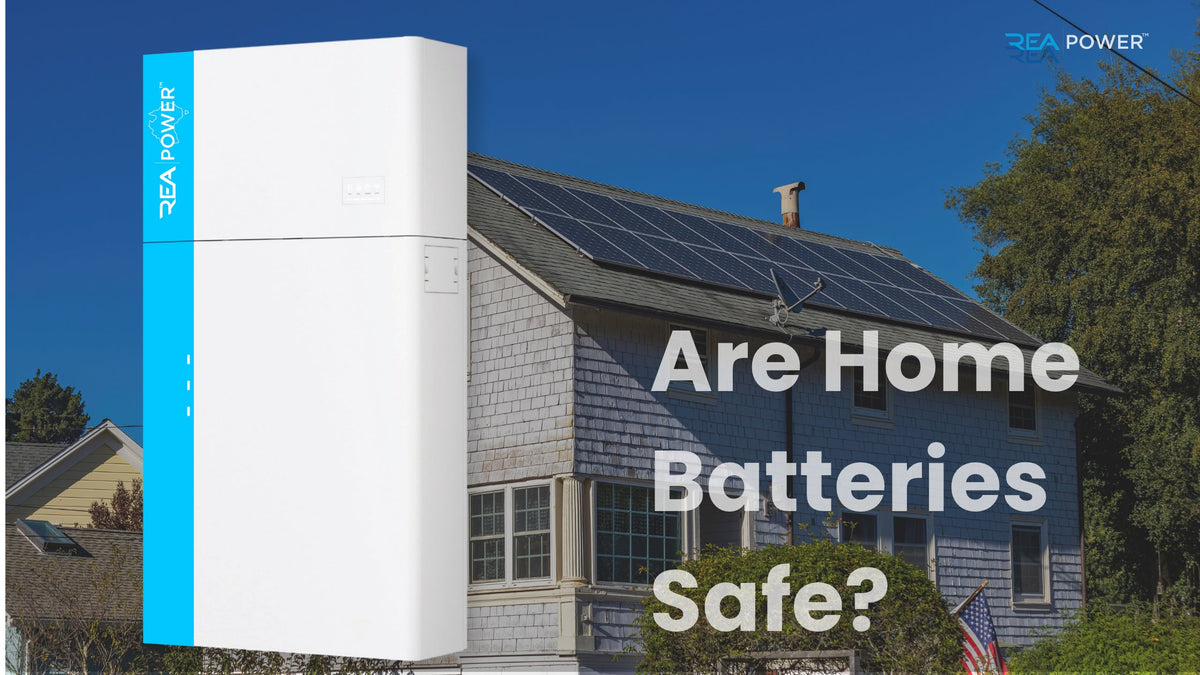
The short answer: Yes, home batteries are safe when you choose a quality product, have it installed by an accredited installer and place it in a suitable location. However, because lithium batteries store a lot of energy in a relatively small space, their design and built-in safety features matter.
A safer home battery is designed to prevent a problem in one cell from affecting the rest of the battery. Its chemistry, operating voltage and overall construction all play a part. REA Power's POWERBANK X is designed with these safety considerations in mind.
Key takeaways
- Most battery fires start when a damaged or faulty cell overheats and causes heat to spread. This is known as thermal runaway.
- LFP (lithium iron phosphate) batteries are generally more resistant to heat than some other lithium battery chemistries.
- Extra-low-voltage batteries avoid the several hundred volts of DC used by many conventional home battery systems.
- In independent fire testing by CNPP, a deliberately failed cell in POWERBANK X did not cause the failure to spread through the battery.
- Where you install a battery matters. Shade, airflow, clearances and compliance with AS/NZS 5139 all need to be considered.
What causes a home battery fire?
One of the main risks with lithium batteries is something called thermal runaway.
This happens when a battery cell becomes damaged, develops a fault or gets too hot. Instead of cooling down normally, it starts producing more heat than it can release. The cell may then release hot, flammable gases, which can cause nearby cells to overheat as well.
Once thermal runaway starts, it can be difficult to control. A cell can continue heating even after the original problem has passed. This is also why some battery fires can reignite after the flames appear to have gone out.
There are several things that can trigger this:
- Physical damage: A battery can be damaged by a knock, crush or impact, such as a vehicle accidentally hitting one in a garage.
- Manufacturing defects: Problems inside a battery cell may develop over time and affect how it operates.
- Charging problems: Charging outside the battery's recommended voltage, current or temperature limits can cause issues.
- Excessive heat: Regular exposure to temperatures above the battery's rated operating range can affect its safety and performance.
- Poor installation: Loose electrical connections, water getting inside or not leaving enough clearance around the battery can create additional risks.
Quality home batteries also have a battery management system (BMS). Think of this as the battery's built-in monitoring system. It keeps track of cell temperatures and voltage, helps keep the cells balanced, and can shut the battery down if something goes outside its safe operating limits.
It's an important safety feature, but it isn't a complete solution. A BMS can't repair a faulty cell or make an unsuitable installation location safe.
What makes a home battery safer?
Not all home batteries are built the same way. The chemistry, voltage and ability to contain a cell failure can all affect how a battery performs when something goes wrong.
Here are three important things to look for when comparing home batteries in Australia.
1. LFP battery chemistry
Most home batteries use one of two main lithium chemistries: LFP (lithium iron phosphate) or NMC (nickel manganese cobalt).
LFP batteries are generally more heat-stable than NMC batteries. One reason is how their internal materials behave when exposed to high temperatures.
When an NMC cell overheats, its cathode can release oxygen, which can make a fire harder to control. LFP cells are less likely to release oxygen under similar conditions, making them more resistant to heat-related failures.
This doesn't mean an LFP battery can't catch fire. Physical damage, manufacturing defects and excessive heat can still cause problems.
That's why POWERBANK X uses LFP cells alongside other safety features rather than relying on battery chemistry alone.
2. Extra-low-voltage design
Another important consideration is the voltage a home battery operates at.
Many home batteries operate at several hundred volts DC. POWERBANK X takes a different approach by using an extra-low-voltage design to reduce electrical risks.
It uses two key technologies:
- SafeCell™ keeps each POWERBANK X module operating at 25.6 V nominal, well below the 120 V DC extra-low-voltage limit in the Australian wiring rules.
- ParallelProtect™ allows homeowners to add more battery storage capacity without converting the system into a high-voltage DC setup.
Operating at a lower voltage reduces the risk of electric shock and electrical arcing. It also means technicians and firefighters have less exposure to high-voltage DC when working around the system.
However, lower voltage doesn't mean there are no electrical risks. The battery still stores considerable energy, so correct installation and placement remain important.
3. Keeping a cell failure from spreading
Here's one of the most important questions to ask when comparing home batteries:
If one battery cell fails, can the problem spread to the rest of the battery?
A well-designed battery should have safety measures that help contain a problem rather than allowing it to affect the entire system.
REA Power's manufacturing partner, ATMOCE in Germany, has completed extensive safety testing with CNPP in France, an independent fire-safety testing body. The testing was conducted to demonstrate the fire-containment performance of REA POWERBANK X (report PE 26 15503).
One of the tests looked at what could happen if a battery cell failed under extreme conditions.
Here's what happened:
- The battery was fully charged to 100%, meaning it was at its highest-energy state.
- One cell was deliberately overheated until it failed.
- The gases released by the cell were deliberately ignited.
What were the results?
Under those test conditions, the failure did not spread into thermal runaway throughout the battery pack.
CNPP also observed:
- No explosion or ejected material.
- No gases escaping into the surroundings.
- No significant increase in the overall battery temperature.
- Battery communication remained operational, and the electrical protection had not tripped.
In simple terms, one cell was deliberately made to fail while the battery was fully charged, but the problem remained contained under the test conditions.
This is an important part of battery safety. Rather than simply preventing problems from happening, good battery design also considers what happens when something does go wrong.
No battery is completely fireproof, though. Proper installation and the right location are still essential.
Where should a home battery be installed?
Where you install a home battery is just as important as choosing the right system. Even a well-designed battery needs a suitable location to operate safely.
In Australia, battery installations must comply with AS/NZS 5139, which covers battery placement, clearances and protection requirements. The standard was amended in December 2025, so homeowners should ask their installer which requirements apply to their installation.
Here are a few things your installer should consider:
- Heat and sunlight: POWERBANK X operates between −20 °C and 55 °C, with its warranty recommending 15 °C to 30 °C for the best performance. Avoid exposed west-facing walls and uninsulated metal sheds that can become very hot.
- Clearance: Leave the manufacturer's recommended space around the battery, including from walls, ceilings and flammable materials.
- Ventilation: Make sure the battery has suitable airflow. Avoid enclosed cupboards or sealed spaces unless the manufacturer approves them.
- Weather protection: POWERBANK X has an IP66 rating, meaning it's dust-tight and protected against powerful water jets. However, the location must still meet the manufacturer's installation requirements.
- Vehicle protection: If the battery is installed in a garage, it should be protected from accidental vehicle impact.
Your accredited installer should assess the location, explain why it's suitable and make sure the installation meets the relevant safety requirements.
Battery warning signs to watch for
Home batteries are designed to operate safely, but it's still worth knowing what to look out for.
Contact your installer or a licensed electrician if you notice:
- A swollen, bulging or distorted battery case.
- An unusual chemical or pungent smell.
- Hissing, popping or crackling sounds.
- The battery feeling unusually hot.
- Repeated alerts, shutdowns or temperature warnings in your battery app.
- Scorch marks, soot or staining around the battery.
- Leaks, visible damage or a sudden drop in performance.
Don't open the battery or attempt to repair it yourself. If you notice smoke, fire or signs of an immediate safety issue, move away and call Triple Zero (000).
What to do if a battery is smoking or on fire
Get out, stay out and call Triple Zero (000).
If your home battery starts smoking or catches fire, don't try to handle the situation yourself. Follow these steps:
- Move everyone well away from the battery and smoke. Close doors behind you if it's safe to do so.
- Call 000 and tell the operator there's a battery system at the property. Explain where it's located.
- Wait somewhere safe and don't go back inside until firefighters confirm it's safe.
- Seek urgent medical attention if anyone has breathed in the smoke or come into contact with leaked battery fluid.
Never try to move, cool down or put out a burning battery yourself.
Fire and Rescue NSW warns that battery smoke can be toxic and flammable. Batteries can also reignite even after the flames appear to have stopped.
Even if the fire seems to be out, call 000 and let emergency services assess the situation.
Questions to ask your battery installer
Before choosing a home battery, it's worth asking your installer a few questions. You don't need to understand every technical detail, but you should know how the system will be installed and what safety measures are in place.
- Are you accredited to install home battery systems?
- What battery chemistry does the system use, and what temperatures can it operate in?
- What voltage does the battery run at, and does this change when I add more capacity?
- Which safety standards and certifications does the battery meet?
- Where will the battery be installed, and how does that location comply with AS/NZS 5139?
- Who should I contact if I have a problem or need to make a warranty claim?
A good installer should be happy to explain these things before you commit to a system.
Why choose REA Power POWERBANK X?
POWERBANK X is designed with battery safety in mind, from the cells it uses to the way its modules operate. It combines LFP chemistry, extra-low-voltage technology and independent fire-safety testing.
The system is supplied through accredited Power Partners. In Queensland, REA Solar also installs POWERBANK X for homes and businesses.
Some of its key features include:
- World's safest battery solution: Extensive safety testing with CNPP in France supports its cell-failure containment performance.
- LFP battery chemistry: Provides 7 kWh of usable storage capacity per module.
- Extra-low-voltage operation: SafeCell™ and ParallelProtect™ keep each module at 25.6 V nominal, even when additional capacity is added.
- Built for demanding conditions: IP66-rated and certified to IEC 62619 and IEC 63056.
- 15-year warranty: Or 29.2 MWh of energy throughput, whichever comes first. The battery must remain connected to the internet to maintain the full warranty.
For homeowners comparing home batteries in Australia, these features offer a useful starting point when looking at battery safety, installation and long-term performance.
Frequently asked questions
Are home batteries safe?
Yes, when they're quality products, professionally installed and placed in a suitable location.
What is the safest type of home battery?
Look for LFP chemistry, extra-low-voltage design, independent fire testing and recognised safety certifications such as IEC 62619.
What is thermal runaway in a home battery?
It's when a battery cell overheats and produces more heat than it can release, potentially causing a fire that spreads to nearby cells.
Is an LFP battery safer than other lithium batteries?
Generally, yes. LFP batteries are more thermally stable than NMC batteries, although they still require proper installation and protection.
Are low-voltage home batteries safer?
Extra-low-voltage batteries reduce electric shock and electrical arcing risks compared with high-voltage systems.
How is POWERBANK X tested for fire safety?
ATMOCE tested POWERBANK X with CNPP in France. During testing, a cell was deliberately made to fail at full charge, but the failure did not spread through the battery pack under the test conditions.
Can I install a home battery in my garage?
Yes, if the location meets AS/NZS 5139 and the manufacturer's requirements, including protection against vehicle impact.
How often should a home battery be inspected?
An annual professional inspection is a practical approach for most homes. Follow the manufacturer's maintenance recommendations.
What should I do if my home battery catches fire?
Get everyone out, close doors if safe and call Triple Zero (000). Never attempt to move or extinguish a burning battery yourself.
Ready for a safer home battery?
If you're considering battery storage for your home or business, talk to REA Power about POWERBANK X. Call 1300 360 047 or contact us to connect with an authorised Power Partner for an energy analysis and quote.
Thinking about pairing battery storage with solar? Read our article, Are AC Solar Panels Safer?, to learn how REA Power takes high-voltage DC off your roof.
Installers and energy professionals: Become an REA Power Partner and offer your customers reliable solar and battery storage solutions.

Leave a comment
This site is protected by hCaptcha and the hCaptcha Privacy Policy and Terms of Service apply.