
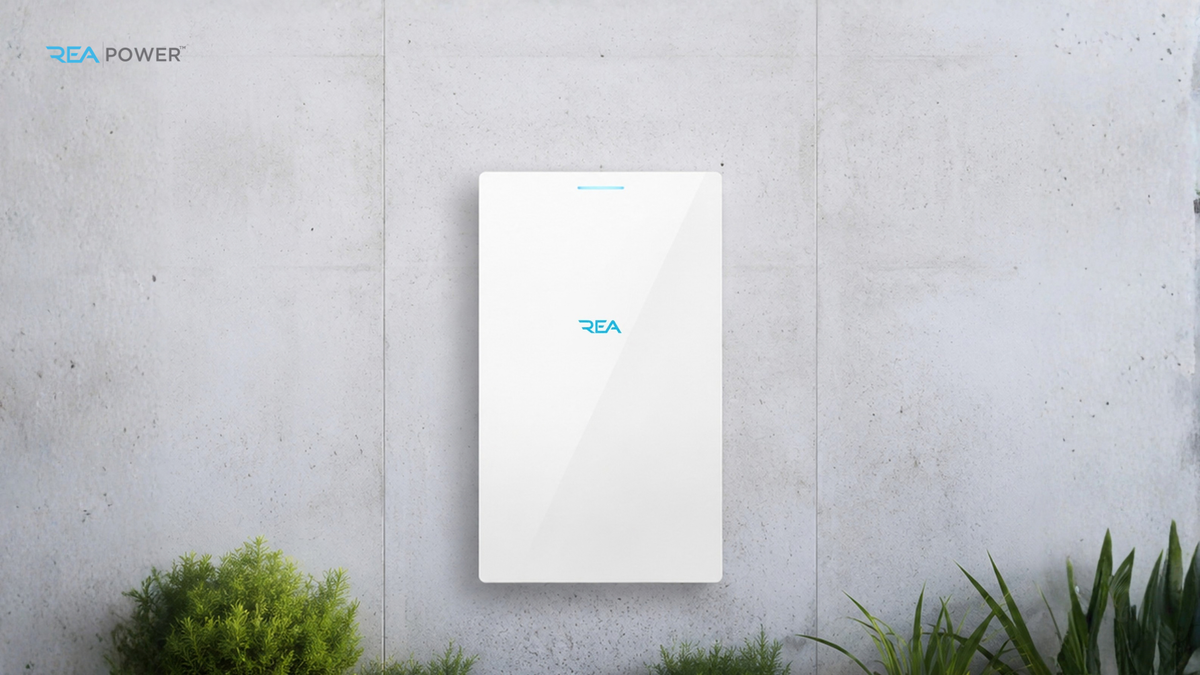
This POWERBANK X FAQ covers the questions homeowners are likely to have after hearing about the battery from an installer or coming across it while comparing options. It covers capacity, configurations, the PowerHub Gateway, installation, and how it differs from the existing POWERBANK.
For a fuller introduction to the product, see POWERBANK X: REA Power's Next-Generation Home Battery, Explained. If you’re looking for a specific specification or have a question about how POWERBANK X works, start with the answers below.
What is POWERBANK X?
POWERBANK X is REA Power's modular home battery, built on lithium iron phosphate (LFP) chemistry. Each unit provides 7.168kWh of total energy and 7kWh of usable energy, and it's available in two configurations — POWERBANK X-1P for single-phase homes and POWERBANK X-3P for three-phase properties.
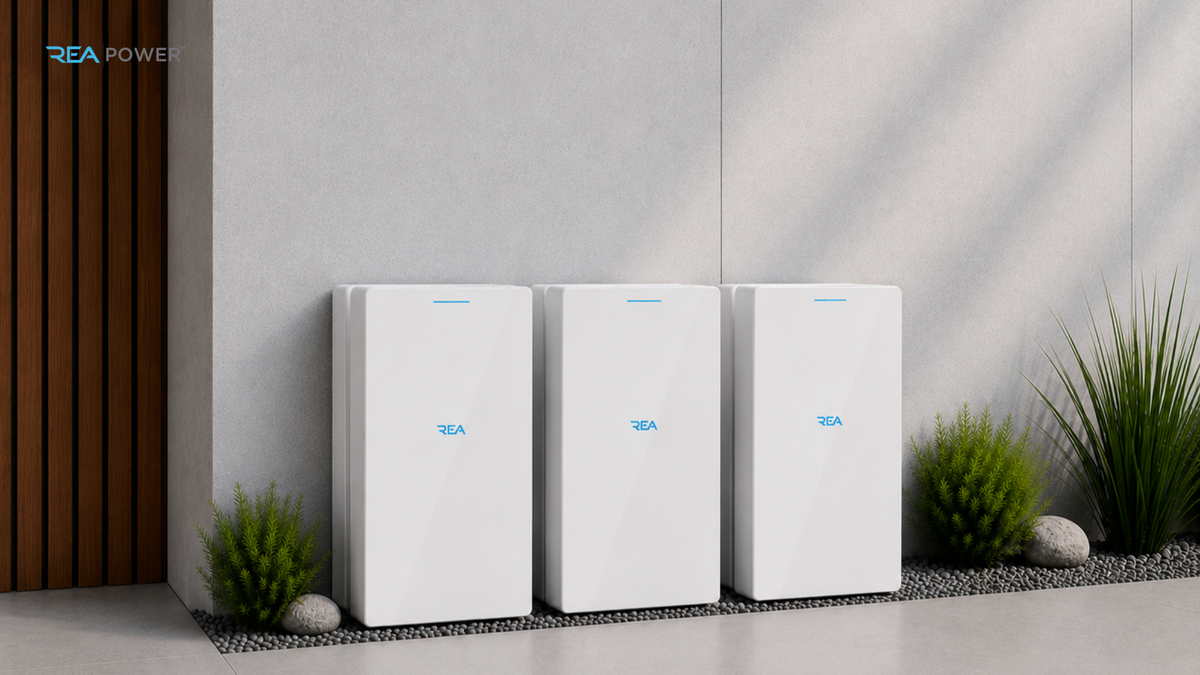
It's designed to work alongside a dedicated PowerHub Gateway, and multiple units can be installed together where more storage is needed. For the full picture of how it's built and who's behind it, the main POWERBANK X article covers that in more detail.
How much energy does POWERBANK X store?
Each POWERBANK X unit has 7.168kWh of total energy and 7kWh of usable energy. The difference matters: total energy is what the cells can physically hold, while usable energy is what's actually available to draw on.
POWERBANK X has a 100% usable depth of discharge, meaning the stated 7kWh usable capacity is available for normal operation rather than a portion being reserved and inaccessible. This figure describes stored energy, not backup runtime — how long that energy lasts in practice depends on what's drawing power in the home and how the system is configured, which is something to work through with a qualified installer rather than assume from the capacity figure alone.
What is the difference between POWERBANK X and the existing POWERBANK?
The main differences come down to capacity, physical size, and configuration. It’s not simply a case of one being a newer version of the other. The existing POWERBANK offers 10.1kWh of usable capacity in a single unit, while POWERBANK X offers 7kWh usable per unit in a slimmer 195mm-deep enclosure.
POWERBANK X also introduces single-phase (X-1P) and three-phase (X-3P) configurations, a dedicated PowerHub Gateway, a 10,000-cycle rating, 96% DC round-trip efficiency, and its 100% usable depth of discharge. Its modular design means capacity is built up by adding units rather than sizing one larger battery upfront.
Which approach suits a property better depends on available installation space, phase configuration, and how much capacity is needed now versus later. The existing POWERBANK page has the full specifications for that product if you're weighing the two up.
Is POWERBANK X available for three-phase homes?
Yes. POWERBANK X is available in a three-phase configuration called POWERBANK X-3P. The X-1P version is designed for single-phase systems.
Phase configuration affects how a battery connects to the home's electrical supply, so it isn't something to guess — most Australian homes are single-phase, but three-phase supply is common in larger homes, some rural properties, and small businesses. The correct configuration is confirmed as part of system design with your installer.
What does the PowerHub Gateway do?
The PowerHub Gateway is a core part of how POWERBANK X works as a system. It houses the REA-Gateway along with dedicated breakers for the PV array, the grid connection, the battery, and backup loads.
It also provides CT metering — accurate to 0.1% — for PV generation, battery activity, and household consumption. That metering is what allows the system to manage functions including whole-home backup, self-consumption, time-of-use optimisation, and grid communication for things like demand response.
It's worth being clear on the split: the battery stores and supplies energy, but the Gateway is what coordinates backup switching, monitoring, and how the system responds to the grid. One doesn't do the other's job.
Can POWERBANK X be expanded?
Yes. POWERBANK X is modular, and REA Power's published specifications support up to 16 battery units on a single Gateway, scaling to a maximum of 112kWh of total battery capacity and 80kVA of power output. This suits households whose electricity use changes over time — for example, if energy needs increase after a system was first installed.
Whether extra capacity can be added to a specific existing installation depends on factors like available space, the Gateway's configuration, and the property's electrical setup, so it's worth checking with an installer rather than assuming units can always be added later without adjustment.
What is the maximum output of POWERBANK X?
POWERBANK X has a maximum output of 5kVA. kWh describes how much energy is stored; kVA describes how much power the system can deliver at a given moment.
A battery can hold plenty of stored energy but still be limited in how much it can output at once, which affects how much electrical load it can support at once. The 5kVA figure describes the system's rated output, not a guarantee about running an entire home during an outage — that depends on the home's loads and how the system is configured.
How efficient is POWERBANK X?
POWERBANK X has a DC round-trip efficiency of 96%. Round-trip efficiency measures how much of the energy put into the battery is available again when it's discharged, since some energy is always lost as heat during charging and discharging.
A 96% figure means those losses are relatively small on the DC side of the system. It's a useful indicator of how the battery itself performs, though overall system efficiency in a real household also depends on other equipment and operating conditions.
How long is POWERBANK X designed to last?
POWERBANK X carries a 10,000-cycle rating. A cycle is roughly one full charge and discharge of the battery, and the rating reflects how many cycles it's designed to handle.
This isn't the same as a guaranteed number of years in service — actual lifespan depends on how the battery is used, how often it's cycled, and the conditions it operates in. A cycle rating is a useful reference point, not a fixed lifespan claim.
Can POWERBANK X be installed outdoors?
The battery has an IP66 enclosure rating and an operating range of -20°C to 55°C, and can be floor or wall-mounted. Those specifications are relevant to outdoor installation, particularly given the range of conditions across Australia.
The PowerHub Gateway is a separate enclosure with its own IP65 rating and a -30°C to 50°C operating range. Both have specifications relevant to outdoor installations, but the suitability of a specific location — including exposure, ventilation, and access — still needs to be assessed by the installer.
How is POWERBANK X engineered?
POWERBANK X is designed in Germany by ATMOCE, REA Power’s technology partner. Its battery cells, power-conversion electronics and advanced control architecture are built on ATMOCE’s engineering. REA Power brings this advanced energy platform to the Australian market, with the system and energy management optimised for the Australian energy market. More on the partnership is on the ATMOCE page.
Can I monitor POWERBANK X from my phone?
Yes. POWERBANK X can be monitored through REA Cloud and the REA App, which let you check how the battery and connected solar system are performing without needing to inspect the equipment in person.
Still Have Questions?
If you've got a question this FAQ hasn't covered — or want to know whether POWERBANK X suits your specific solar system, phase configuration, or backup needs — get in touch with REA Power or call 1300 360 047, or speak with a qualified solar and battery installer. An installer can assess your property's electrical setup and confirm the appropriate system configuration.

Leave a comment
This site is protected by hCaptcha and the hCaptcha Privacy Policy and Terms of Service apply.