
If you've had a solar quote recently, you've probably run into the same wall most Australian homes and businesses do: roof space is finite. Whether it's a hipped roof with shading from next door, a warehouse roof shared with HVAC plant and skylights, or a townhouse with barely enough north-facing area to fit a decent-sized system, the question isn't really "how many panels can I fit" — it's "how much energy can I actually get out of the space I've got."
That's where what’s happening inside the panel starts to matter. One of the developments worth understanding is back contact solar panel technology, including the FRC technology used in REA Power’s Type X modules.
What Is FRC Technology?
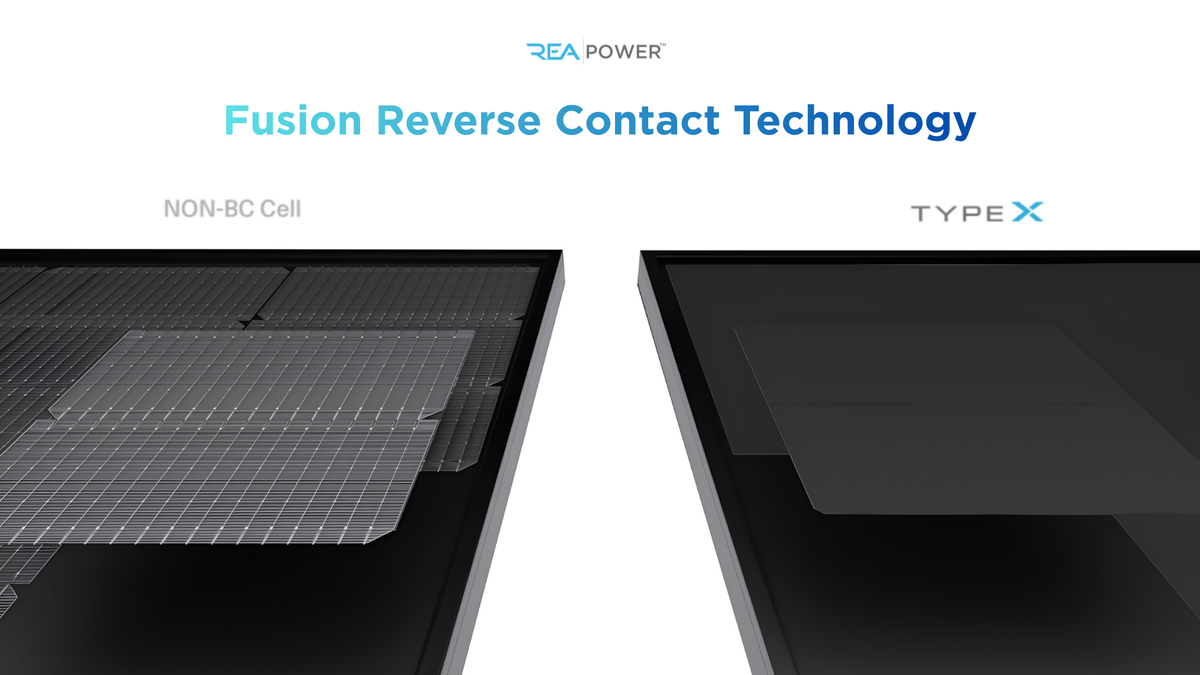
FRC stands for Fusion Reverse Contact. It's REA Power's name for its current generation of back contact cell technology — cells where the electrical contacts and wiring that normally sit on the front of a solar cell are moved to the rear instead.
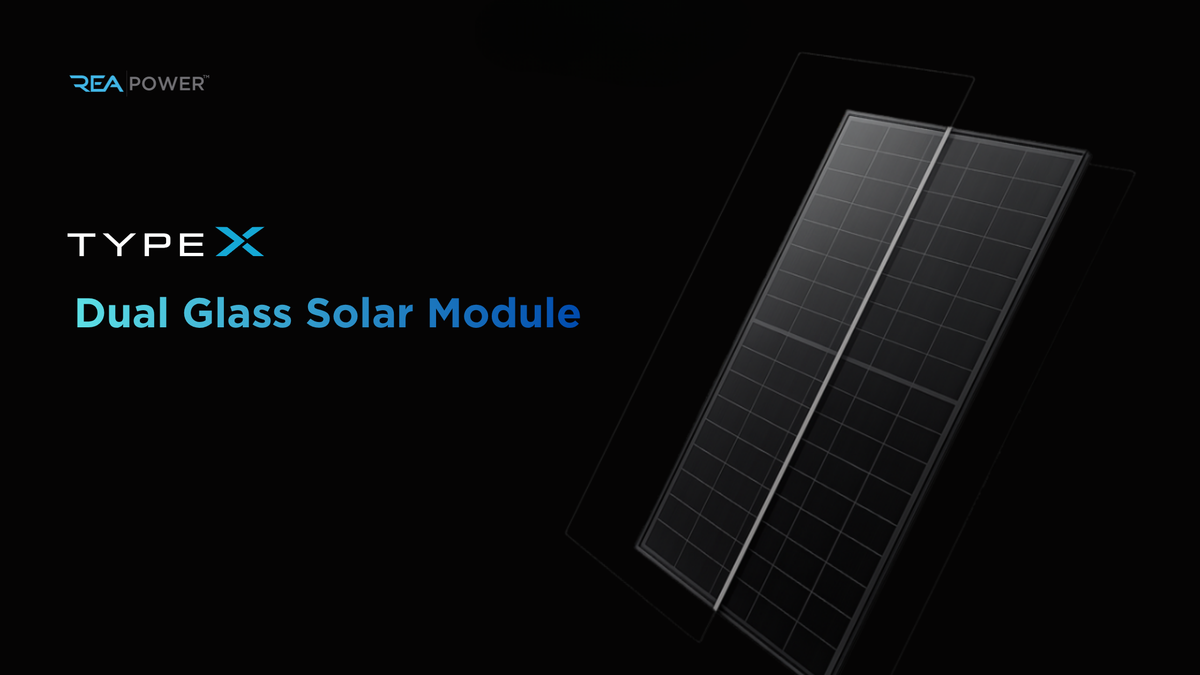
It's worth being clear about the terminology here, because it gets muddled a lot in solar marketing. FusionCell is REA Power's broader technology platform for cell design — it's the umbrella under which different cell architectures sit over time. FRC is the specific back-contact implementation currently used under that platform. So FRC isn't a separate category from back-contact technology; it's REA Power's engineered version of it, built into modules like the Type X Cell Dual Glass panel.
How Does Back Contact Cell Technology Work?
On a conventional solar cell, thin metal fingers and busbars sit across the front surface to collect the electrical current generated when sunlight hits the cell. Those fingers do their job, but they also sit directly in the path of incoming light, shading a small portion of the cell at all times.
Back contact cell technology relocates that wiring to the rear of the cell. The front of the cell is left largely unobstructed, giving sunlight more direct access to the active surface. In practical terms, that means more of the cell's front surface is actually available to absorb light rather than being partially blocked by metal contacts.
That small difference becomes more significant when it is repeated across every cell in a panel and every panel on a roof. One reason back-contact designs can achieve higher efficiency is that the front of the cell has fewer electrical contacts blocking incoming light.
Why Moving Contacts to the Back Improves Performance
There are a few flow-on effects once the contacts are moved off the front:
- Less shading loss. With no visible grid lines on the front, there's less obstruction between the sun and the active cell area.
- Cleaner front surface. A more uniform front surface can also help with light capture at oblique angles, which matters for panels that aren't always facing the sun square-on, such as those on east or west-facing roof planes.
- A more even aesthetic. This is a secondary benefit, but it's one customers often mention — panels without visible front-side busbars tend to look more uniform on the roof, which matters for residential installs where street appeal is a factor.
Where N-Type Cells Fit In
FRC cells, as used in REA Power's Type X module, are built on N-type back contact solar panel architecture. N-type silicon is less susceptible to some forms of light-induced degradation than traditional P-type silicon, which is one reason it has become increasingly common in high-efficiency solar cells.
Pairing N-type silicon with a back-contact design isn't about one technology "boosting" the other in some dramatic way. It's more that the two work well together: N-type material provides a stable, high-quality base, and moving the contacts to the rear lets that base perform closer to its potential without front-side shading getting in the way.
Back Contact vs TOPCon: What's the Real Difference?
TOPCon and back-contact designs are often compared because both are used in high-efficiency solar cells, but they use different approaches to improve cell performance.
TOPCon (Tunnel Oxide Passivated Contact) uses a passivated contact structure to reduce electrical losses at the cell surface. In common TOPCon designs, electrical contacts are still present on the front of the cell.
Back-contact technology, including FRC, takes a different architectural approach by moving the electrical contacts to the rear of the cell.
For a customer, the practical difference is fairly straightforward: back-contact designs move the electrical contacts away from the front of the cell, reducing front-side obstruction, while TOPCon improves cell performance through its passivated contact structure. Both are high-efficiency approaches, but they use different cell architectures.
Why This Matters When Roof Space Is Limited
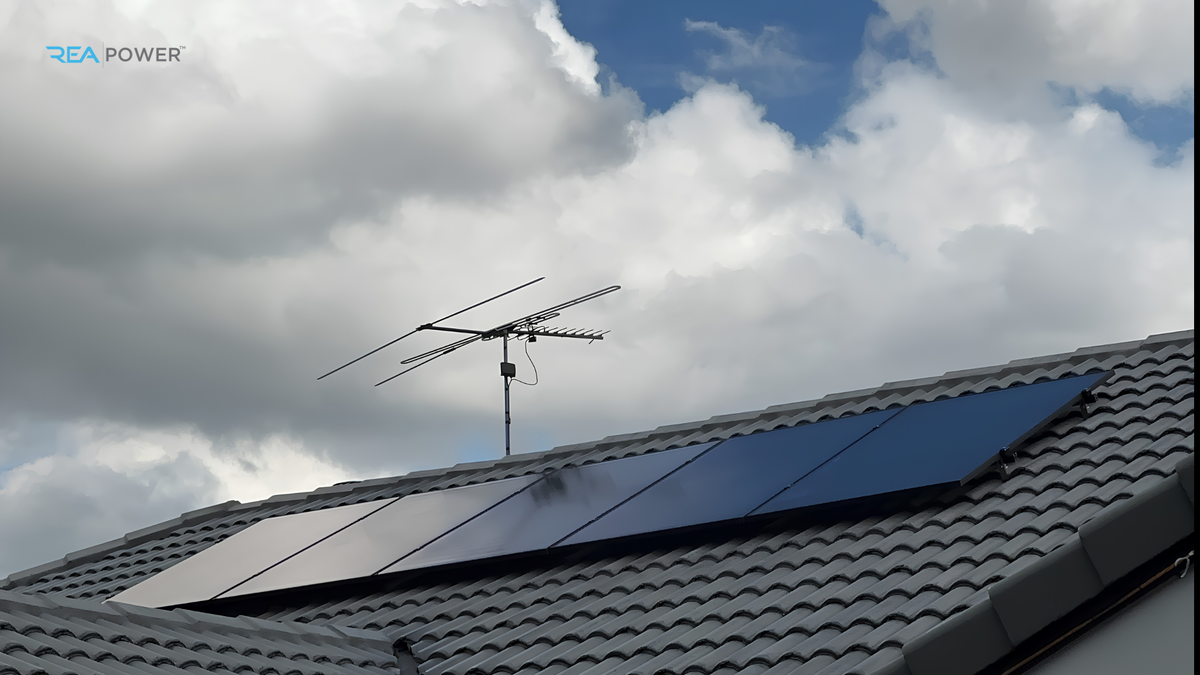
None of this is really about chasing efficiency numbers for their own sake. It matters because when roof space is fixed — and for most Australian homes and a lot of commercial sites, it is — getting more usable energy out of each square metre of panel directly affects system sizing.
For a residential customer with a compact roof, a shaded section, or an awkward angle, a higher-performing panel can mean the difference between fitting a system that actually covers daytime usage and settling for something undersized. For commercial sites, where roof area often has to be shared with plant, walkways, and orientation constraints, the same principle applies at a larger scale — every panel doing more work reduces the pressure to find additional mounting area.
Is Higher-Efficiency Solar Right for Your Roof?
If you're weighing up solar options and roof space is a genuine constraint, it's worth understanding what's actually happening inside the panel, not just the headline specs on a datasheet. REA Power uses FRC technology in its Type X Cell Dual Glass modules, and supports residential and commercial solar projects across Australia and international markets including the UK and EU.
Want to see whether higher-efficiency technology makes sense for your site? Talk to REA Power about your project. Call 1300 360 047 or get in touch via the REA Power contact page.
FAQ
What does FRC stand for?
FRC stands for Fusion Reverse Contact, REA Power's current back-contact cell technology, built under its broader FusionCell technology platform.
Is FRC the same as back contact technology?
FRC is REA Power’s specific implementation of back-contact cell technology. While back contact refers to the broader technology category, FRC is the technology platform developed specifically for REA Power’s solar modules.
Are FRC panels more efficient than standard panels?
FRC can support higher module efficiency by reducing front-side shading from electrical contacts. The actual efficiency depends on the specific cell and module design, so the datasheet remains the best reference for a particular product.
What's the difference between back contact and TOPCon panels?
TOPCon improves the way the cell manages electrical charge through passivation and contact design, while common TOPCon modules still use front-side contacts. Back-contact technology instead places the electrical contacts on the rear of the cell.
Why does N-type silicon matter for back-contact panels?
N-type silicon is generally more resistant to light-induced degradation over time, and it pairs well with back-contact designs because both are aimed at improving long-term, real-world performance rather than just peak lab efficiency.

Leave a comment
This site is protected by hCaptcha and the hCaptcha Privacy Policy and Terms of Service apply.