
If you've been comparing solar quotes, you may have noticed some panels are described as "dual glass" or "glass-on-glass." The difference comes down to what's protecting the solar cells inside, and that can affect how a panel handles years of sun, heat, and weather.
What Is a Dual-Glass Solar Module?
A conventional solar panel is built like a sandwich: tempered glass on the front, solar cells in the middle, and a thin polymer sheet — a backsheet — on the rear. The backsheet protects and seals the cells, but polymer materials can gradually degrade when they’re exposed to years of UV, heat and weather.
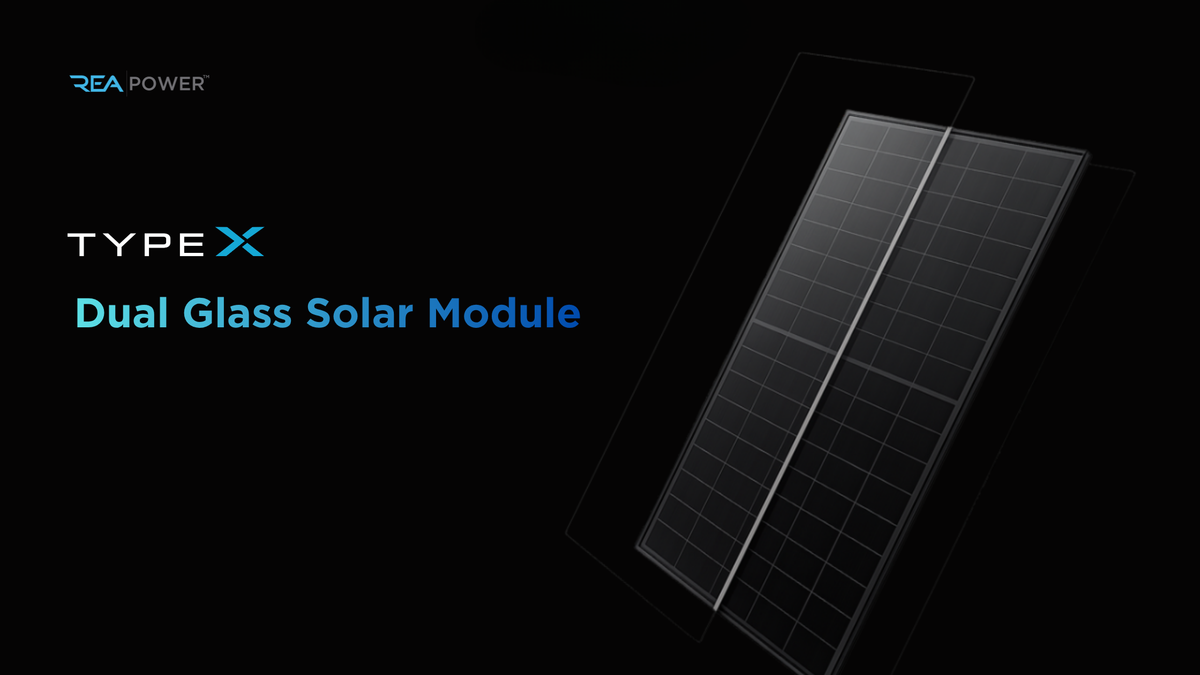
A dual glass solar module replaces that plastic backsheet with a second sheet of tempered glass, so the layers run glass–cell–glass instead of glass–cell–plastic. You'll also see this called a double glass solar panel, or a "glass-on-glass module."
Why Does The Second Layer Of Glass Matter?
The glass and rear layer of a panel have an important job: protecting the cells and other internal components from moisture, UV exposure and the weather. A polymer backsheet can do that job well, but like any material exposed to years of sun and heat, it can gradually deteriorate. Once moisture works its way past a compromised seal, it can corrode internal circuitry or gradually reduce output.
Glass behaves differently. It is highly resistant to UV exposure and environmental degradation, while also providing a durable barrier against moisture. That's a big part of the thinking behind dual glass solar panel durability: the rear of the module gets the same kind of glass protection as the front, rather than relying on a polymer backsheet.
That said, dual glass isn't a guarantee of a longer life on its own. It doesn't replace the need for good installation, solid framing and proper edge sealing. A poorly installed dual-glass panel can still develop faults, and a well-built single-glass panel can perform reliably for years too. What dual glass does is remove one potential long-term weak point at the rear of the module, which matters when a panel is expected to sit outdoors for decades.
What Does This Mean For Solar Panel Lifespan In Australia?
Australia isn't gentle on anything mounted outdoors. Australia exposes rooftop solar to strong UV, high temperatures, humidity, salt air in coastal areas, and severe weather in many regions.
That combination puts real, ongoing stress on panel materials, so the way a panel is built matters when you’re thinking about solar panel lifespan in Australia. A durable barrier against moisture and UV can be particularly useful in a climate that puts this much stress on outdoor materials. It doesn't guarantee a specific extra lifespan, though, since that also depends on the product, installation and maintenance. The basic idea is simple: keeping moisture and other environmental exposure away from the internal components can help support long-term reliability.
Dual Glass Vs Conventional Solar Panels
|
Conventional module |
Dual glass module |
|
|
Front layer |
Tempered glass |
Tempered glass |
|
Rear layer |
Polymer backsheet |
Tempered glass |
|
Rear-side protection |
Polymer-based |
Glass-based |
|
UV/environmental resistance |
Depends on backsheet material |
Highly resistant |
|
Typical weight |
Lighter |
Generally heavier |
Is Dual Glass The Same As Bifacial?
No, and it's a common mix-up. Dual glass describes how a panel is physically built — glass on both sides rather than glass and plastic. Bifacial describes what it can do — generate electricity from light hitting both the front and rear of the cells, often using light reflected off a roof or ground surface.
A panel can be dual-glass without being bifacial. In practice, the two are often paired. A glass rear layer can allow light to reach the rear of bifacial cells, while the bifacial design is what allows those cells to use that additional light.
How FusionCell Uses Dual-Glass Technology
FusionCell's Type X Cell Dual Glass Solar Module is a practical example of this construction. It combines dual-glass panel design with FusionCell's Fusion Reverse Contact (FRC) cell technology and N-Type, 0BB cell architecture, producing 475–500W of output with module efficiency of up to 24.5%.
With glass on both sides and a bifacial cell design, Type X can also generate additional energy from suitable light reaching the rear of the module. FusionCell backs the module with a 25-year product warranty and a 30-year linear performance warranty, with degradation specified at 0.35% annually and power retention of 88.85% after 30 years. These are the manufacturer's stated specifications for this product, not a claim that every dual-glass panel performs identically — actual results still depend on installation quality, site conditions and system design.
Choosing The Right Solar System With REA Power
Panel construction is one part of a bigger decision — the right system also depends on your roof, energy usage, inverter choice and how it's all engineered together. REA Power works with customers across Australia, the UK and Europe, using its product knowledge and engineering experience to help customers choose components that suit their property or project.
If you're weighing up dual-glass panels against conventional options, or just want a straight answer for your situation, it's worth talking it through with someone who deals with this daily. Call REA Power on 1300 360 047 or Contact REA Power.
FAQs
What is a dual glass solar panel?
A panel built with tempered glass on both the front and rear, instead of glass on the front and a polymer backsheet behind. Also called a double glass or glass-on-glass module.
Are dual-glass solar panels more durable?
Generally, yes — glass gives a more consistent barrier against moisture and UV than a polymer backsheet, though durability also depends on installation and site conditions.
What is the difference between dual-glass and bifacial solar panels?
Dual glass describes the panel's construction — glass on both sides. Bifacial describes its ability to generate power from light hitting both faces. A panel can be both.
Do dual-glass solar panels last longer?
They're designed to better resist rear-side degradation from moisture and UV, which can support a longer working life — though no construction can guarantee a specific lifespan.


Zostaw komentarz
Ta strona jest chroniona przez hCaptcha i obowiązują na niej Polityka prywatności i Warunki korzystania z usługi serwisu hCaptcha.