
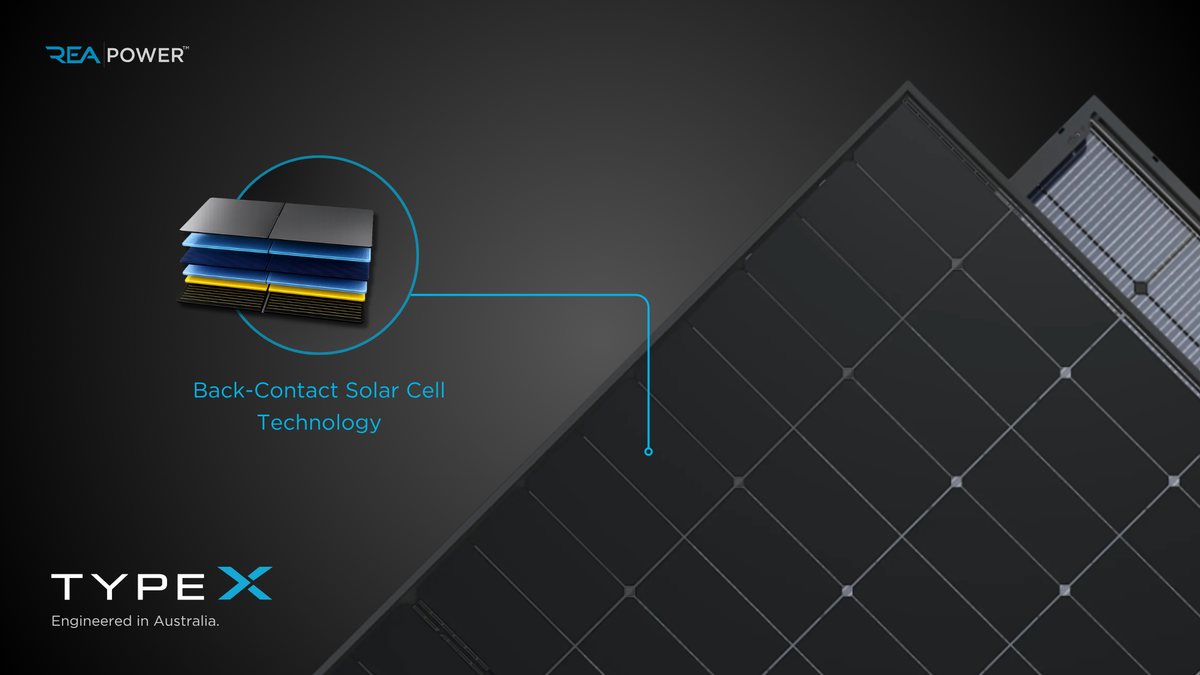
Solar technology has come a long way in the last decade, and manufacturers keep finding smarter ways to squeeze more electricity out of the same sunlight. One of REA Power's biggest leaps forward is FRC (Fusion Reverse Contact) — our own back-contact cell technology, moving every electrical connection to the rear of the cell instead of running it across the front.
FRC sits within FusionCell™, REA Power's technology family for advanced cell architectures, alongside our previous-generation HJT cells. Where HJT laid the groundwork for high efficiency and low degradation, FRC takes it further still by clearing the front of the cell completely.
It sounds like a small change. The results aren't. More sunlight reaches the cell, efficiency goes up, and you get that clean, uninterrupted all-black finish along with it.
If you're comparing premium solar panels for your home, business, or a larger energy project, understanding how FRC works will help you see exactly what you're paying for.
What Is FRC (Fusion Reverse Contact) Technology?
Picture a standard solar cell: a network of thin silver lines running across the front, collecting the electricity it generates. Those lines work — but they also sit directly in the sun's path, blocking a small portion of every ray that hits the panel.
FRC solves this by moving all of that wiring to the back of the cell. Nothing sits on the front to get in the way. More surface area is left clear to soak up sunlight, and more of that sunlight gets turned into power.
In simple terms:
- Traditional cells have front-side metal lines that quietly cost you some light.
- FRC cells hide all the wiring out of sight, behind the cell.
- More exposed surface means more sunlight converted into electricity.
It's a design that improves both how much power your panel makes and how good it looks doing it — without changing how it's installed or maintained.
How Does FRC Differ from Conventional Solar Cells?
It comes down to where the electricity gets collected.
Conventional Front-Contact Cells
Most standard panels use front-contact cells — the ones with visible silver grid lines running across the surface. Those lines do their job carrying electricity, but they also create small shaded patches that stop a bit of sunlight from ever reaching the cell underneath. Manufacturing has made those lines thinner over the years, but the light loss never fully goes away.
FRC Solar Cells
With FRC, all of that wiring moves out of sight. Nearly the whole front surface is left free to do one job: absorb sunlight.
That trade-off pays off with:
- Greater light absorption
- More active cell surface exposed to the sun
- Higher power output
- Better efficiency where roof space is tight
- A cleaner, more uniform look
It looks simple on paper, but manufacturing FRC cells takes real precision — which is exactly why it sits at the premium end of the FusionCell™ range.
Why Does FRC Improve Solar Panel Efficiency?
The short answer: more sunlight actually reaches the cell.
Strip away the front metal contacts, and a larger share of incoming light gets converted into electricity instead of being reflected or blocked before it even has a chance.
That extra light-catching surface adds up — helping premium FRC modules push conversion efficiencies higher than many conventional designs.
It matters most when:
- Roof space is limited
- You want maximum energy from every square metre
- Long-term electricity savings are the priority
- You need more performance without adding more panels
Instead of chasing bigger panels, you can get more out of smarter cell design.
A Cleaner Look Without Visible Grid Lines
The first thing most homeowners notice is how it looks.
No visible busbars, no grid lines — just a smooth, all-black surface that reads as sleek and modern rather than "solar panel." It's the kind of finish that's become a favourite for:
- Premium residential homes
- Architect-designed builds
- Commercial developments
- Luxury properties
- Any project where looks matter as much as output
It's not just cosmetic, though — that clean surface is a direct reflection of the extra active cell area doing the work underneath.
How Type X Takes FRC Further
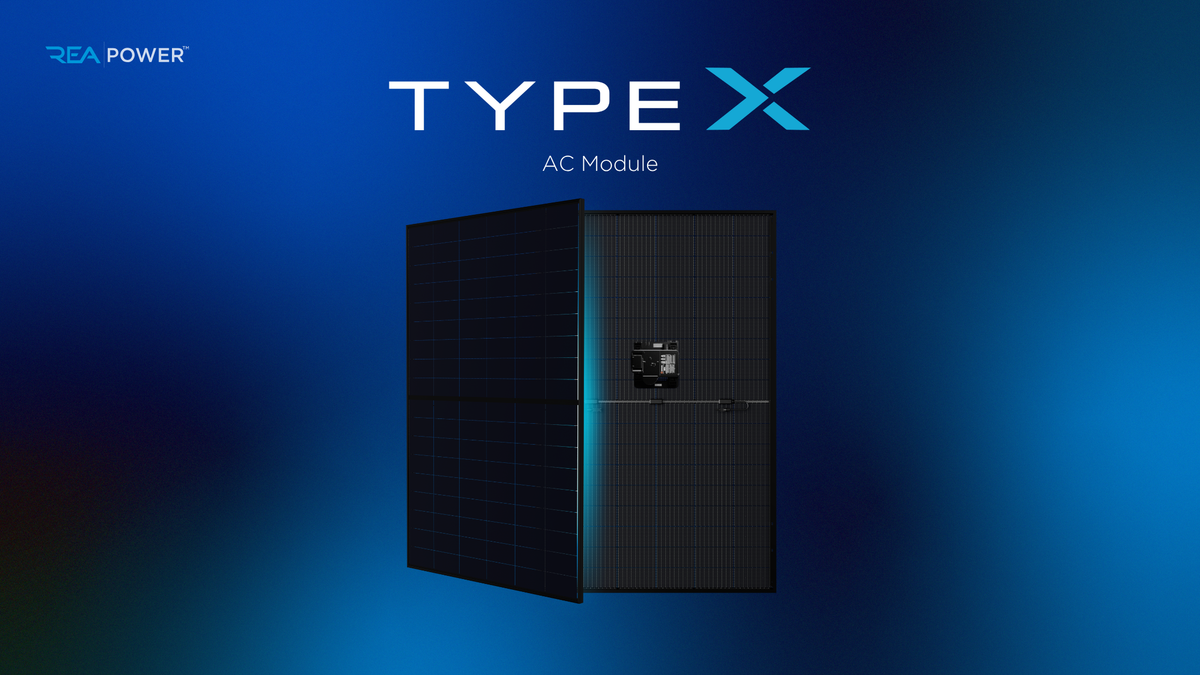
REA Power's Type X module builds on FRC by bringing it together with several other premium technologies in one high-performance module — what we call FusionCell™ Architecture.
Type X combines:
- FRC (Fusion Reverse Contact) cell technology
- Advanced N-Type solar cells
- Zero Busbar (0BB) architecture, replacing conventional busbars with advanced interconnection methods
- Dual-glass construction
- Bifacial capability (selected models)
Working together, these are engineered to squeeze out more energy, lift module efficiency, and hold up reliably across a wide range of climates.
The result is a module built for homes, businesses, and larger installations alike — where efficiency, durability, and longevity all need to show up at once.
For the full picture on specs and available models, see our Type X Solar Module Guide.
Durability and Long-Term Performance
Efficiency only counts if it lasts. Premium FRC panels are built to keep performing across decades on the roof, and REA Power's modules are designed and tested against internationally recognised quality and safety standards.
Paired with N-Type cells and dual-glass construction, FRC modules also bring:
- Better resistance to moisture
- Lower risk of corrosion
- Slower degradation over time
- Stronger reliability in tough weather
- Stable performance even when it's hot
For most system owners, how well a panel performs in year twenty matters just as much as how it performs on day one — a panel holding its output over time means real, compounding value over its lifetime.
Why FRC Matters When Comparing Solar Panels
It's easy to compare panels on wattage alone. But the cell technology behind that number is often what really drives long-term value.
Choosing FRC (Fusion Reverse Contact) technology can mean:
- More energy from the same roof space
- A cleaner, more premium look
- Stronger long-term efficiency
- Better use of the sunlight you've got
- Higher potential lifetime output
That matters most if your roof space is limited, or if you're simply after the most energy possible without adding more panels.
So instead of asking "how many watts?" — ask how efficiently those watts hold up over the next 25 to 30 years.
Why Choose REA Power?
Choosing the right solar technology starts with choosing a manufacturer that takes innovation, quality, and long-term performance seriously.
REA Power designs and builds advanced solar modules and battery storage systems for homes, businesses, and utility-scale projects — engineered for performance and trusted by authorised distributors and installation partners across Australia, the UK, Europe, and beyond.
Choosing REA Power means:
- FusionCell™ technologies, including FRC (Fusion Reverse Contact) cell technology
- High-efficiency modules engineered to last
- Advanced battery storage for a wide range of needs
- Rigorous quality standards and thorough product testing
- Industry-leading product and performance warranties
- A growing global network of distributors and installers
Whether you're a homeowner, a business, a developer, or a solar professional — REA Power builds the technology behind dependable energy, for years to come.
Call 1300 360 047 or visit the REA Power contact page to find an authorised distributor or installation partner near you.
Frequently Asked Questions
What is FRC (Fusion Reverse Contact) technology?
FRC is REA Power's back-contact cell technology, part of the FusionCell technology family. It places all electrical contacts on the rear of the cell instead of the front, allowing more sunlight to reach the active surface — improving efficiency while creating a cleaner, all-black appearance.
What is FusionCell?
FusionCell is REA Power's technology brand covering our advanced solar cell architectures. It includes FRC, our current back-contact technology, and HJT, our previous-generation cell technology.
How does FRC improve solar panel efficiency?
Removing front-side metal grid lines allows more sunlight to reach the active solar cell surface. By increasing the amount of light available for energy conversion, FRC helps improve overall power generation.
Is FRC more expensive than standard cells?
FRC solar panels are generally positioned within the premium segment because they require more advanced manufacturing. However, many buyers consider the higher efficiency, improved appearance, and stronger long-term performance worthwhile over the system's lifespan.
Which solar panels use FRC cell technology?
REA Power's Type X module combines FRC (Fusion Reverse Contact) architecture with N-Type cells, Zero Busbar technology, and dual-glass construction to deliver high-performance solar solutions for residential and commercial applications.

Zostaw komentarz
Ta strona jest chroniona przez hCaptcha i obowiązują na niej Polityka prywatności i Warunki korzystania z usługi serwisu hCaptcha.