
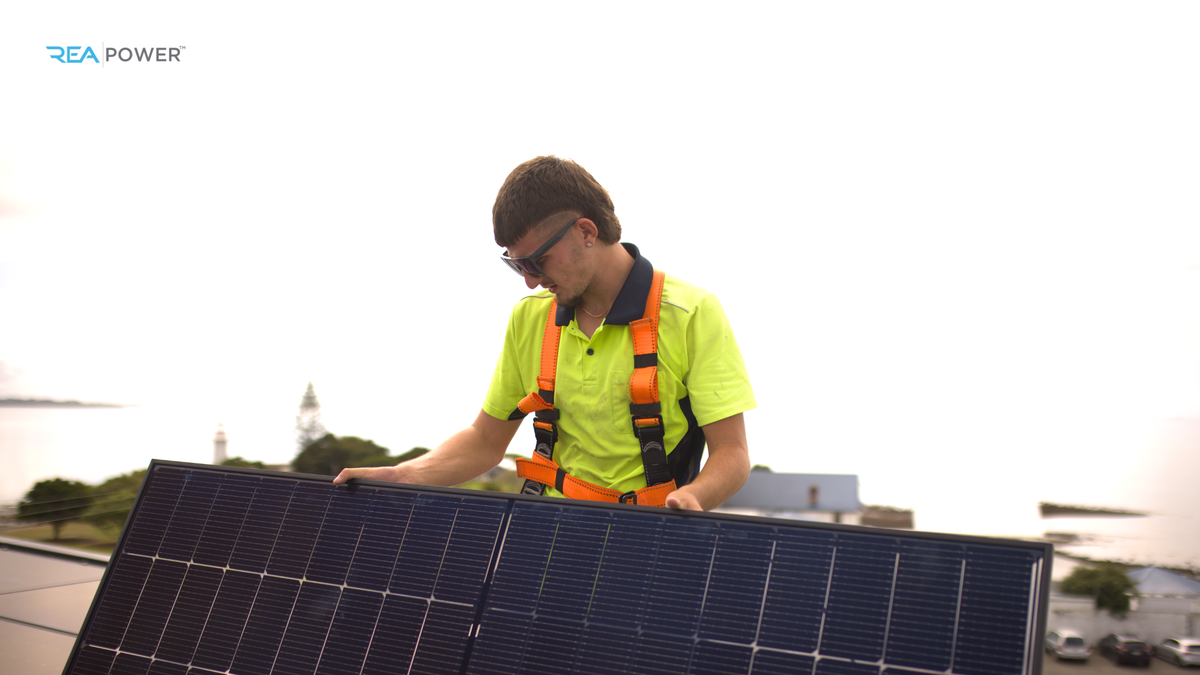
Tasmania may be Australia's coolest state, but rooftop solar can still be a genuinely sound investment. Solar panels generate electricity from daylight, not heat, and cooler operating conditions can actually support efficient panel performance. The real question for most Tasmanian households isn't whether solar works here — it's whether a system has been properly sized, positioned and designed for the property's roof, shading, consumption and seasonal demand.
Why Solar Makes Sense in a Cool Climate
Tasmanian homes often use more electricity in winter for heating and hot water, which shifts the usual solar math a little. A well-designed system can reduce grid electricity bought during daylight hours, and a compatible battery can store surplus generation for use in the evening when household demand typically climbs. Results still vary with system size, orientation, weather, tariffs and usage patterns, so a site-specific assessment matters more than a generic estimate.
Tasmania already has substantial rooftop solar uptake. The Tasmanian Government's energy FAQs report tens of thousands of connected solar PV customers across the state, and Tasmania has set a legislated target to produce renewable electricity equal to 200 per cent of its 2020 demand by 2040. More detail is available through Renewables, Climate and Future Industries Tasmania.
Eligible households and small businesses may also be able to reduce the upfront cost of solar through the Australian Government's Small-scale Renewable Energy Scheme, which works through small-scale technology certificates, and eligible battery installations may qualify for support under the Cheaper Home Batteries Program. These schemes and their eligibility rules do change, so it's worth checking current terms and getting advice before building an incentive into your budget.
How Panel Technology Performs in Tasmania's Variable Climate
Modern high-efficiency solar panels often bring together several technologies that work to improve performance and durability. These can include N-type cell technology with a back-contact design, which REA Power markets as Fusion Reverse Contact (FRC) within its broader FusionCell platform, along with zero-busbar architecture, dual-glass construction and bifacial capability. In simple terms, the back-contact design moves electrical connections away from the front of the cells to maximise the area exposed to sunlight, while the dual-glass construction adds protection and durability. Bifacial panels can also capture some additional light from the rear, depending on factors such as mounting height, ground reflectivity and overall system design.
That combination is relevant to Tasmania's conditions specifically. Solar production is naturally lower during shorter winter days. However, panels still convert whatever daylight is available into electricity, and cooler panel temperatures can actually be favourable — photovoltaic modules generally lose some efficiency as they heat up. A good installer should model expected annual and seasonal output for your property rather than promise a fixed "winter boost."
The bifacial gain, in particular, depends heavily on the installation itself. It tends to be more pronounced on elevated arrays, carports, ground-mounted systems, or light-coloured surfaces where reflected light can actually reach the rear glass. On a closely mounted, dark pitched roof, rear-side gains are typically more modest. Product capability and system design need to be considered together, not treated as separate decisions.
Why Warranty Terms Deserve as Much Attention as Wattage
Solar systems are expected to work for decades, so warranty duration and scope are worth as much scrutiny as headline output figures. Long coverage matters particularly in Tasmania, where modules face years of rain, wind, moisture, temperature swings and — in some locations — coastal exposure. Dual-glass construction is designed to strengthen environmental protection, but a warranty is never a substitute for correct installation.
When comparing quotes, it's worth asking for the specific datasheet, warranty document, exclusions and claims process for the exact module being quoted — headline figures like "25-year product warranty" or "30-year performance warranty" only tell part of the story. Confirm the separate warranty terms that apply to the inverter, battery, mounting equipment and installation workmanship as well, since these often differ from the panel warranty itself.
What a Good Tasmanian Solar Quote Should Cover
Roof pitch, winter shading from surrounding trees, frost exposure and household electricity-use patterns all affect what system actually makes sense for a property — a generic package rarely accounts for these properly. A solid quote should be based on:
- Your recent electricity bills and actual usage patterns, not assumptions.
- Roof layout, orientation and any shading across the seasons.
- Future electricity loads worth planning for now — an EV, heat pump, home extension, or a shift away from gas can materially change consumption and are easier to plan for upfront than to retrofit later.
- Clear specifications for the exact panel and inverter models proposed, along with realistic production estimates rather than best-case figures.
Planning for future loads early can help avoid an undersized system or unnecessary alterations down the track.
Frequently Asked Questions
Do solar panels work well in Tasmania's climate?
Yes. Solar panels generate electricity from daylight rather than heat, and can operate efficiently in cool conditions. Annual output depends on roof orientation, tilt, shading, system design and local weather, so a site-specific estimate from an installer is more reliable than a general assumption.
Does solar still make sense given Tasmania's winter electricity demand?
Often, yes — though the value proposition looks a little different than in warmer states. A well-sized system reduces grid electricity purchased during daylight hours year-round, and a battery can help cover evening demand when heating and hot water use typically peaks.
What government incentives are available for solar and batteries in Tasmania?
Eligible households may reduce upfront solar costs through the Australian Government's Small-scale Renewable Energy Scheme, and eligible battery installations may qualify under the Cheaper Home Batteries Program. Eligibility and scheme terms change over time, so it's worth confirming current rules before budgeting around them.
What's the difference between a product warranty and a performance warranty?
A product warranty covers eligible defects in materials and workmanship over a set period. A performance warranty sets a minimum output level the panel should maintain over a longer period, such as 30 years. Both are worth reading in full rather than relying on headline durations.
Does bifacial panel technology make a real difference in Tasmania?
It can, but the gain depends heavily on installation specifics — mounting height, tilt and what's beneath or around the array. Elevated arrays or installations over light-coloured surfaces tend to see more benefit than panels mounted flush against a dark roof.
Get a Local Quote
Looking for REA Power solar and battery solutions in Tasmania? In Series Electrical & Solar is an authorised REA Power installation partner for Launceston and northern Tasmania, while Banks Electrical & Solar services Hobart and southern Tasmania. Both can assess your property and provide a tailored quote based on your energy needs.
You can view the latest product specifications, warranty information and the complete REA Power range on the REA Power website.
Let’s Talk About Partnering with REA Power
Running a solar or electrical business and looking to add reliable solar solutions to your offering? REA Power is growing its authorised partner network and is open to conversations with experienced businesses across Australia.
Have questions about becoming a partner? Call us on 1300 360 047 or reach out through the REA Power contact page.

Zostaw komentarz
Ta strona jest chroniona przez hCaptcha i obowiązują na niej Polityka prywatności i Warunki korzystania z usługi serwisu hCaptcha.